
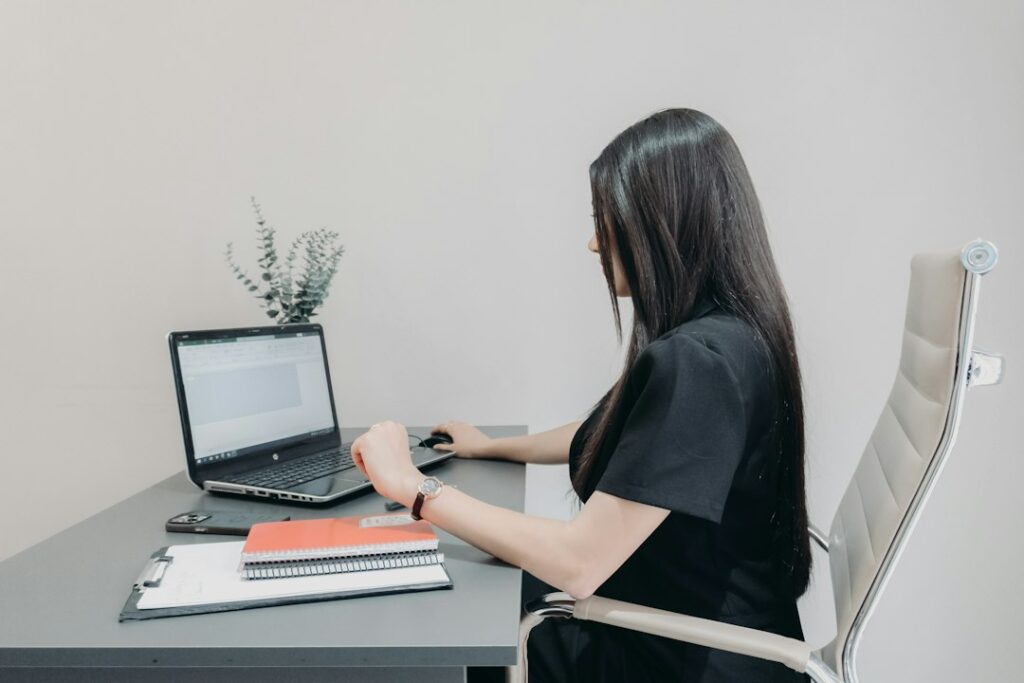
Neck pain related to technology use is often caused by prolonged positioning, repeated movements, and too little movement throughout the day. Phones, laptops, tablets, monitors, and gaming devices can all contribute, especially when the head stays tilted forward for long periods.
For residents of Greece, where work, school, commuting, and household routines may involve substantial screen time, understanding the mechanics behind “tech neck” can help reduce strain without blaming technology itself.
What does technology use have to do with neck pain?
Technology does not automatically cause a neck injury. The problem usually develops when the neck remains in one position for too long, particularly when the head is angled downward or held slightly forward.
The head is relatively heavy, and the muscles at the back of the neck must work harder as it moves farther in front of the shoulders. Over time, this can lead to:
- Muscle fatigue and tightness
- Aching across the neck and upper shoulders
- Headaches that begin near the base of the skull
- Stiffness when turning or looking upward
- Discomfort between the shoulder blades
- Tingling or numbness when nerves are irritated
A person may not notice the strain during the first few minutes of screen use. Symptoms often appear later in the day or after several consecutive days of similar habits.
Which devices are most likely to cause problems?
Any device can contribute to neck discomfort if it encourages prolonged, awkward positioning. Phones and tablets are common sources because they are frequently used below eye level. Laptops can also be challenging because the screen and keyboard are attached, making it difficult to position both comfortably at the same time.
Desktop computers may be easier to arrange well, but they can still cause pain if the monitor is too low, too far away, or positioned off to one side.
Gaming and streaming can create a similar problem. A person may sit still for hours, lean forward during focused activity, or rotate the neck slightly toward a screen. Reading on a phone in bed may also keep the neck bent for a long period, particularly when pillows place the head at an unusual angle.
Why does looking down create so much strain?
Looking down does not damage the neck after one brief use. The concern is the combination of angle, duration, and repetition.
When the chin moves toward the chest, the muscles supporting the head remain active. If that position continues for twenty, thirty, or sixty minutes, those muscles may become overworked. The upper back and shoulders often compensate by rounding forward, which can further alter how the neck moves.
This is why a person may feel fine while texting but develop soreness afterward. Muscles can tolerate short periods of stress more easily than static postures maintained repeatedly throughout the day.
How can a workstation be adjusted?
A comfortable workstation allows the head to remain balanced over the shoulders rather than reaching forward. Useful adjustments include:
- Positioning the top portion of a monitor near eye level
- Keeping the screen directly in front of the body
- Placing the screen close enough to read without leaning forward
- Supporting the lower back while sitting
- Keeping both feet supported when possible
- Using an external keyboard and mouse if a laptop is raised
- Relaxing the shoulders instead of holding them elevated
There is no single perfect posture that must be maintained all day. Even an excellent setup becomes uncomfortable if the body remains motionless. Changing position regularly is just as important as arranging the chair and screen.
What habits can reduce neck pain from phones and tablets?
The most helpful change is reducing the amount of time spent looking downward without interruption. Holding a phone closer to eye level can reduce neck bending, although the arms may tire if held too high for too long.
It can also help to:
- Use voice-to-text for longer messages
- Rest the forearms on a pillow or armrest
- Alternate hands rather than gripping with one hand continuously
- Take short movement breaks during scrolling or reading
- Avoid holding the phone between the ear and shoulder
- Use a stand when watching longer videos
- Limit prolonged device use in bed
The goal is not to eliminate normal phone use. It is to interrupt the cycle of sustained neck flexion and repetitive hand or shoulder positioning.

How often should someone move during screen time?
Frequent, brief movement is generally more useful than waiting until pain becomes intense. Every twenty to thirty minutes, a person can look away from the screen, change position, stand, or walk briefly.
Simple movements may include:
- Slowly turning the head left and right
- Drawing the chin gently backward without looking down
- Rolling the shoulders in a relaxed manner
- Stretching the chest by bringing the arms gently behind the body
- Walking for a minute or two
Movements should be controlled and comfortable. Forceful neck circles, sudden jerking, or stretching into sharp pain can aggravate symptoms.
Could neck pain be caused by something other than technology?
Yes. Screen use may reveal or intensify a problem without being the original cause. Neck discomfort can also be associated with sleeping position, stress-related muscle tension, repetitive work, lifting, falls, arthritis, joint irritation, or an injury.
Seasonal routines may influence symptoms as well. During colder months in Greece, people may spend more time indoors at desks, on couches, or using devices in less supportive positions. Winter clothing, reduced outdoor activity, and prolonged sitting can also contribute to general stiffness. These factors do not prove that technology caused the pain, but they can make an existing issue more noticeable.
When is neck pain a reason to seek medical evaluation?
Most mild, posture-related soreness improves with movement, rest from aggravating positions, and gradual return to normal activity. Medical evaluation is more appropriate when pain follows a significant fall, collision, or other injury, or when symptoms are severe, worsening, or persistent.
Prompt evaluation is especially important for neck pain accompanied by:
- Weakness in an arm or hand
- Numbness or persistent tingling
- Loss of coordination or balance
- Severe headache, fever, or unusual illness symptoms
- Pain spreading into the chest or causing breathing difficulty
- Trouble controlling bladder or bowel function
- New symptoms after a major impact
A person with ongoing symptoms should avoid assuming that every problem is simply “tech neck.” A qualified healthcare professional can help determine whether the issue involves muscles, joints, nerves, or another condition.
What is the main misconception about “tech neck”?
The phrase can make neck pain sound like a single diagnosis. It is better understood as a description of discomfort associated with prolonged device-related posture and repetitive use.
The solution is not perfect posture at every moment. A more realistic approach combines a reasonably arranged workspace, regular position changes, comfortable movement, adequate sleep, and attention to warning signs. Technology can remain part of work, education, communication, and recreation while the neck is given more opportunities to move and recover.
